Showing posts with label TCM Research. Show all posts

Nov 3, 2022

Curbing COVID-19 progression and mortality with traditional Chinese medicine among hospitalized patients with COVID-19: A propensity score-matched analysis

This clinical research was conducted in our hospital and other hospitals in Taiwan. I am glad NRICM101 and NRICM 102 do help lots of patients in Taiwan and all over the world!


Curbing COVID-19 progression and mortality with traditional Chinese medicine among hospitalized patients with COVID-19: A propensity score-matched analysis


https://www.sciencedirect.com/science/article/pii/S1043661822003577


Abstract

Background

Viral- and host-targeted traditional Chinese medicine (TCM) formulae NRICM101 and NRICM102 were administered to hospitalized patients with COVID-19 during the mid-2021 outbreak in Taiwan. We report the outcomes by measuring the risks of intubation or admission to intensive care unit (ICU) for patients requiring no oxygen support, and death for those requiring oxygen therapy.

Methods

This multicenter retrospective study retrieved data of 840 patients admitted to 9 hospitals between May 1 and July 26, 2021. After propensity score matching, 302 patients (151 received NRICM101 and 151 did not) and 246 patients (123 received NRICM102 and 123 did not) were included in the analysis to assess relative risks.

Results

During the 30-day observation period, no endpoint occurred in the patients receiving NRICM101 plus usual care while 14 (9.27%) in the group receiving only usual care were intubated or admitted to ICU. The numbers of deceased patients were 7 (5.69%) in the group receiving NRICM102 plus usual care and 27 (21.95%) in the usual care group. No patients receiving NRICM101 transitioned to a more severe status; NRICM102 users were 74.07% less likely to die than non-users (relative risk= 25.93%, 95% confidence interval 11.73%-57.29%).

Conclusion

NRICM101 and NRICM102 were significantly associated with a lower risk of intubation/ICU admission or death among patients with mild-to-severe COVID-19. This study provides real-world evidence of adopting broad-spectrum oral therapeutics and shortening the gap between outbreak and effective response. It offers a new vision in our preparation for future pandemics.



Nov 25, 2018

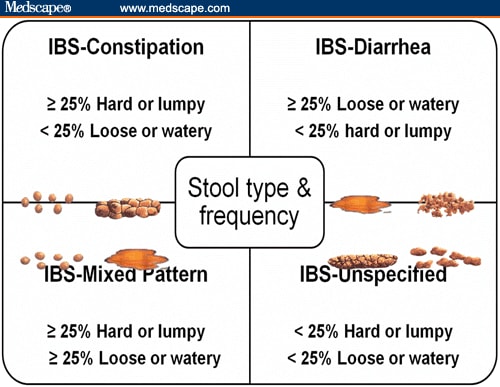
Irritable Bowel Syndrome


I delivered a lecture to our interns and residents on the topic "Irritable Bowel Syndrome" earlier this month.

There's an article published on JAMA, using herbal medicine to treat IBS tewnty years ago.


JAMA. 1998 Nov 11;280(18):1585-9.
Treatment of irritable bowel syndrome with Chinese herbal medicine: a randomized controlled trial.
Bensoussan A, Talley NJ, Hing M, Menzies R, Guo A, Ngu M.
CONCLUSION: Chinese herbal formulations appear to offer improvement in symptoms for some patients with IBS.


There are MANY systemic review articles on treating IBS with herbal medicine.

PLoS One. 2017 Dec 18;12(12):e0189491. doi: 10.1371/journal.pone.0189491. eCollection 2017.
Systematic review and meta-analysis of traditional Chinese medicine in the treatment of constipation-predominant irritable bowel syndrome.
Li DY, Dai YK, Zhang YZ, Huang MX, Li RL, Ou-Yang J, Chen WJ, Hu L.
CONCLUSION: TCM showed greater improvement in terms of clinical efficacy in the treatment of IBS-C than cisapride and mosapride, although it was not possible to draw a definitive conclusion due to the small sample size, high risk, and low quality of the studies. Large multi-center and long-term high-quality randomized control trials are needed.

Evid Based Complement Alternat Med. 2016;2016:4071260. doi: 10.1155/2016/4071260. Epub 2016 Jul 31.

Efficacy of Chinese Herbal Medicine for Diarrhea-Predominant Irritable Bowel Syndrome: A Meta-Analysis of Randomized, Double-Blind, Placebo-Controlled Trials.
Zhu JJ, Liu S, Su XL, Wang ZS, Guo Y, Li YJ, Yang Y, Hou LW, Wang QG, Wei RH, Yang JQ, Wei W.
CONCLUSION:This meta-analysis shows that Chinese herbal medicine is an effective and safe treatment for D-IBS. However, due to the small sample size and high heterogeneity, further studies are required.


Clin Gastroenterol Hepatol. 2015 Nov;13(11):1946-54.e1. doi: 10.1016/j.cgh.2015.06.022. Epub 2015 Jun 29.

Efficacy of a Chinese Herbal Medicine in Providing Adequate Relief of Constipation-predominant Irritable Bowel Syndrome: A Randomized Controlled Trial.
Bensoussan A, Kellow JE, Bourchier SJ, Fahey P, Shim L, Malcolm A, Boyce P.
CONCLUSION: In a prospective, controlled study, CHM reduced symptoms of IBS-C, increased bowel satisfaction and stool consistency, and reduced straining and hard lumpy stools, compared with placebo


In our daily practice, the use of Chinese herbal medicine is quite effective in treating IBS in all types, including constipation, diarrhea and mix. We would evaluate the causes of IBS as well as patients' body constitution and then prescribe some herbs to tonify the Qi of the digestive system so that it can function normally. Herbal medicines are usually more natural and harmless. Sometimes we also add acupuncture to treat IBS. 

Although IBS is not a very serious illness, it does affect patients' quality of life and is the second highest cause of work absenteeism. (The highest is common cold.) 


Why not give TCM a try?


Oct 15, 2018

TCM Health Promotion Exercises


We have been conducting a series of studies, sponsored by the Ministry of Health and Welfare, on TCM health promotion by teaching the general public to do some Tao-yin exercises. This photo was taken yesterday when we had a wrap-up presentation for all the participants.

Please refer to these three Youtube videos filmed by the Taiwan Society of Health Promotion, where I now serve as Deputy Secretary-General, for the details:

1. 上壽導引法   Longivity Tao-yin


2. 調氣和神法   Regulate the Qi and Harmonize the Spirit


3. 醫學八段錦  Medical Baduanjin Qigong (Eight Pieces of Brocade)


After practicing each of these Tao-yin exercises for two months, the result all show that the blood pressure and the quality of life, the quality of sleep are statistically significantly better. What's more, when we use BCQ (Body Constitution Questionaire, including BCQ+, BCQ-) to evaluate the body constitution of the participants, the result also shows that the Yin-deficiency, Yang-deficiency and Stasis can be corrected to normal body constitution by practicing these Tao-yin exercises for two months.

As prevention is more important than treatment, we believe it is our first priority for TCM doctors to educate general public/family & friends/patients to avoid being sick. And it works!

Want to stay healthy? These exercises are not so complicated and can be practiced at home at all weather conditions.

Why not join us and give it a try?


Oct 12, 2018

Treating Pediatric Digestive Disorders with Herbal Medicine

We had one of our residents presented this journal this morning: PDF

 2018 Jun 4;172(6):e180315. doi: 10.1001/jamapediatrics.2018.0315. Epub 2018 Jun 4.
Association Between Use of Acid-Suppressive Medications and Antibiotics During Infancy and Allergic Diseases in Early Childhood.


Conclusion: "This study found associations between the use of acid-suppressive medications and antibiotics during the first 6 months of infancy and subsequent development of allergic disease."

This paper brought us a chance to review the physiology of pediatric digestive system in the TCM theory. 

When it comes to treating pediatric digestive disorders, herbal medicine can be very helpful. Parents bring their kids with all kinds of digestive problems to us, such as loss of appetite, abdominal pain/distension, diarrhea, constipation, nausea/vomiting, and low body weight and/or height, etc. These symptoms can usually be controlled or improved by taking herbal medicine for 1-2 weeks.

My kids start taking herbal medicine when indicated at around 1-2 years old. I would prescribe herbal medicine and make the flavor enjoyable for them. Some of my little patients LOVE the taste of herbal medicine. My kids hardly take any western medicine since TCM works perfectly for them.  


Oct 1, 2018

Fibromyalgia Treated with Acupuncture

Pain Med. 2018 Sep 1;19(9):1862-1871. doi: 10.1093/pm/pnx322
Randomized Controlled Trial of Acupuncture for Women with Fibromyalgia: Group Acupuncture with Traditional Chinese Medicine Diagnosis-Based Point Selection.

Full article here


Although the number of patients included in this study is not very big, it uses not some specific acupoints for all patients but chooses acupoints according to each patient's TCM diagnosis. I would highly recommend this kind of treatment since no two patients are the same in 
the eyes of TCM doctors.

For FM treatment, the combination of herbal medicine and acupuncture is usually more effective.

May 19, 2016

Acupuncture: Review and Analysis of Reports on Controlled Clinical Trials


Last week, I delivered a lecture on a World Health Organization report on acupuncture in our weekly morning meeting. It's a review article published in 2002 on controlled clinical trials.

Here is the original article.

In chapter 3, some diseases and disorders that can be treated with acupuncture are listed and categorized according to their effectiveness. Here's iseases, symptoms or conditions for which acupuncture has been proved—through controlled trials—to be an effective treatment:
}Adverse reactions to radiotherapy and/or chemotherapy
}Allergic rhinitis (including hay fever)
}Biliary colic
}Depression (including depressive neurosis and depression following stroke)
}Dysentery, acute bacillary
}Dysmenorrhoea, primary
}Epigastralgia, acute (in peptic ulcer, acute and chronic gastritis, and gastrospasm)
}Facial pain (including craniomandibular disorders)
}Headache
}Hypertension, essential
}Hypotension, primary
}Induction of labour
}Knee pain
}Leukopenia
}Low back pain
}Correction of malposition of fetus
}Morning sickness
}Nausea and vomiting
}Neck pain
}Pain in dentistry (including dental pain and temporomandibular dysfunction)
}Periarthritis of shoulder
}Postoperative pain
}Renal colic
}Rheumatoid arthritis
}Sciatica
}Sprain
}Stroke
}Tennis elbow 

Nov 20, 2015

Improving Sleep Disorder by Practicing Tao-yin for Menopausal Women

18 Jun 2015, 16:15

We're now conducting a clinical research on 
"Improving Sleep Disorder by Practicing Tao-yin for Menopausal Women"
We're looking for participants who live in Taipei, Hsinchu, Taichung and meets the following criteria:

歡迎45~60(實歲),有睡眠障礙之更年期婦女(無治療中之重大疾病)
能自由行走,無肢體障礙或限制活動,
可以親自至收案地點。(6次,每次半小時至1小時,填寫問卷。)
可以國語及台語溝通(speaks Chinese or Taiwanese),經解釋研究目的及過程,
能理解測量問卷之內容,同意受訪加入本研究,並簽署受試者同意書。
在家練習道家養生引術,共持續2個月。

If you know someone who might be interested in participating this research, please contact us.   http://bcq-health.blogspot.tw/


TCM use in patients with inflammatory bowel disease: a population study in Taiwan.

Hepatogastroenterology. 2008 Mar-Apr;55(82-83):467-70.
Patterns of traditional Chinese medicine use in patients with inflammatory bowel disease: a population study in Taiwan.

I see this citation in the morning meeting today about the topic: Ulcerative Colitis
You might also be interested in how Taiwanese use TCM
http://www.ncbi.nlm.nih.gov/pubmed/18613389

Abstract
BACKGROUND/AIMS:
Many researchers have reported on the utilization of complementary and alternative medicine by patients with inflammatory bowel disease (IBD). The aim of this study was to investigate the use of traditional Chinese medicine (TCM) by all IBD patients within the National Health Insurance in Taiwan.

METHODOLOGY:
The complete ambulatory visits records of TCM in 2004 were obtained from the National Health Insurance Research Database. For all IBD patients identified from the registry for catastrophic illness patients, patterns of TCM visits were analyzed.

RESULTS:
The prevalence of IBD in Taiwan was 5.6 per 100,000 persons at the end of 2004. Of 1,206 IBD patients, 440 (37%) patients have in total 3,169 TCM visits in 2004. Women were more likely to use TCM than men (40.5% vs. 34.3%). Among the TCM users of the IBD patients, 200 (45.5%) patients had gastroenterological diagnoses at their TCM visits. Most of their TCM visits contained herbal remedies (90%), followed by manual therapy (11.7%) and acupuncture (9.8%).

CONCLUSIONS:
The high utilization rate of TCM among the IBD patients in Taiwan implied that their needs of medical care were not satisfied by the mainstream Western medicine. The TCM herbal regimens deserve further studies.